

DoorDash wants you to get a side hustle to maintain your financially unsustainable gaming addiction
Gambling, Hustle Culture, and the Gig Economy combine in DoorDash's recent ethics-be-damned advertising campaign.

The above advertisement that appeared in my Meta feed today is so blatantly unethical you’d be excused for thinking it’s a parody.
Gaming is a synonym for Gambling. It’s a term the Gambling industry uses to make what they do sound slightly more socially acceptable.
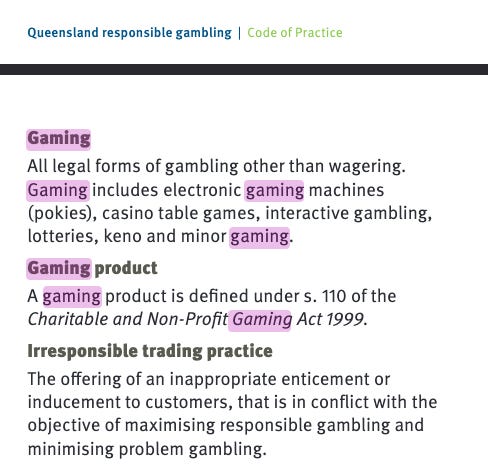
Make no mistake, the choice of word in this advertisement was intentional so it can be argued away that they are referring to video games.
Below I’ll share some snippets from research to explain exactly why this advertisement is so egregiously wrong.
Gambling and young men in Australia is a huge systemic social problem
The man featured in the advertisement was chosen for a reason — here’s the statistics:
1. The man featured in the advertisement fits the demographic of the food delivery drivers most likely to be injured at work
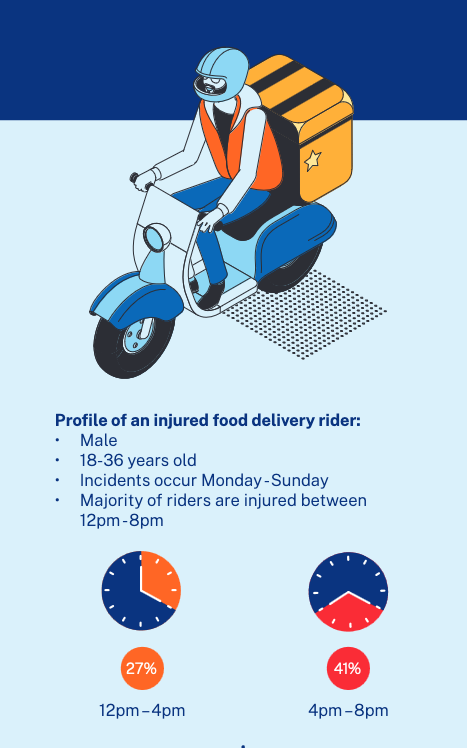
Profile of an injured food delivery rider:
• Male
• 18–36 years old
2. The man featured in the advertisement fits the demographic of the Australians who are the most exposed to gambling advertising on social media
…”Men were more likely than women to report being exposed to wagering advertising (at least once a week) (Figure 2). Young people aged 18–34 years were more likely than older age groups to report exposure to wagering advertising in ‘interactive media’ platforms (i.e. streamed content, social media, online, direct messages, betting affiliates)”
3. The man featured in the advertisement fits the demographic of Australians who have the greatest risk of gambling harm
A greater proportion of men who gambled were at-risk of harm . Young adults aged 18–34 were more than twice as likely to be at risk of harm compared to those aged 55 and older…
4. Gambling advertising targets and encourages young men to start gambling or increase their gambling habit. Yet again, the same demographic as the man featured in this advertisement.
Among young men (aged 18–34 years):
one in seven (15%) started betting for the first time after seeing or hearing wagering ads on TV
one in five increased their betting in response to ads on TV (20%) and social media (20%).
Problems with the gig economy
The gig economy is a health and safety hazard. Advertising a known hazard to someone experiencing the hazard of addiction is unethical
“…Low pay is a health and safety hazard
51 per cent of all respondents have felt pressured to rush or take risks to make enough money or protect their job, which puts both worker safety and customer safety at risk. Over half of the respondents have experienced work-related stress, anxiety, and mental health issues…”Tough Gig — Worker’s perspectives on the gig economy —
The McKell Institure Queensland
Food delivery drivers are bullied and untrained
…Food delivery riders described being bullied by customers who felt entitled to demand that their order be brought to the front door of their apartment,
often in high-rise buildings requiring lengthy unpaid transit times. Some
commented that there was no training, provided by the platform company, on
how to respond to such challenging interpersonal situationsGig Cities Research Report — Australian Research Council and the University of Melbourne
On the off chance they really did mean video games — it’s not great either for this demographic — because it’s basically unregulated gambling
“…Unless urgent action is taken to curb this increase in this form of gambling, AGASA considers that a generation of young people will be acculturated into considering gambling within online games an unremarkable, indeed desirable experience, without appreciating its negative consequences and the need for caution,” it said.
The evidence includes a literature review published this year which looked at 19 studies. It identified links between loot boxes and problem gambling, and recommended that purchasing loot boxes be classified as a form of gambling…”
Gambling in Australia is a huge social problem
…”an estimated 7.9% or 1.39 million Australian adults had experienced one or more gambling-related problems in 2015. That is, their gambling behaviour caused or put them at risk of gambling problems. This included 1% or 193,000 who could be classified as “problem gamblers” — the most severe category….”
Gambling activity in Australia — The Australian Institute of Family Studies
And Australias lose more money than anyone else in the world
“…Australians lose more money gambling than anyone else in the world.
“Higher risk” gamblers — those that are problem or moderate-risk gamblers — make up 1.9–2.8% of the population…”
It’s not like he is going to be making sweet bank DoorDashing, either
…”A new plan to allow DoorDash riders to be paid by the hour rather than for delivery has not been extended to Australia.
Earlier this week DoorDash international announced that its “dashers” can earn money either by time or for each trip. Under the time offer, they’re guaranteed an hourly minimum rate plus 100% of tips, rather than the existing model where they earn for each trip, plus tips.
However, Guardian Australia has confirmed that this change is not being offered to Australian DoorDash riders at this stage.”
Australian DoorDash workers miss out on minimum hourly rate — Guardian Australia
Update:
When I saw this ad, I wrote to Ad Standards (the advertising self-regulation system in Australia) to make a formal complaint, which included some of the statistics above.
This was what DoorDash had to say:

This is what AdStandards had to say:
THE DECISION
The Ad Standards Community Panel (Panel) considered whether the advertisement breaches Section 2 of the AANA Code of Ethics (the Code).
The Panel noted the complainant’s concerns that the advertisement normalises gambling addiction.
The Panel viewed the advertisement and noted the advertiser did not respond.
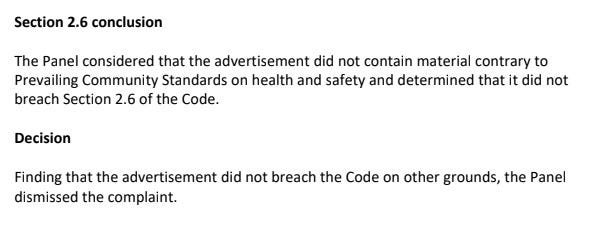
Section 2.6: Advertising shall not depict material contrary to Prevailing Community Standards on health and safety.
The Panel considered that sometimes the words ‘gaming’ and ‘gambling’ may be used interchangeably, and that some members of the community would understand ‘gaming’ to be a term referencing gambling, however other members of the community would interpret this as referring to online video gaming.
A minority of the Panel considered that young people are increasingly impacted by gambling addictions, and that the references to addiction and financial problems in this advertisement was a strong suggestion that the man is struggling with a gambling addiction.
The majority of the Panel considered that the advertisement strongly implied that the man depicted in it was an enthusiastic gamer, devoting substantial time to playing online video games. The Panel considered that the advertisement's central message was to promote DoorDash as an ideal employment choice, especially catering to those who enjoy extended or off-hours online gaming sessions. The Panel considered that by highlighting the flexible working hours, the ad sought to appeal to gamers looking to strike the perfect balance between their passion for gaming and earning a living.
The Panel unanimously recognised the serious financial and social implications of gambling addictions, emphasising the need to treat the issue with utmost sensitivity and avoid normalising or making light of it. That being said, after careful examination, the majority of the Panel concluded that the advertisement in question did not promote gambling in any way. Instead, the Panel considered that it aimed to highlight the alignment between working for DoorDash and the lifestyle of online video gamers.
Self regulation wins again